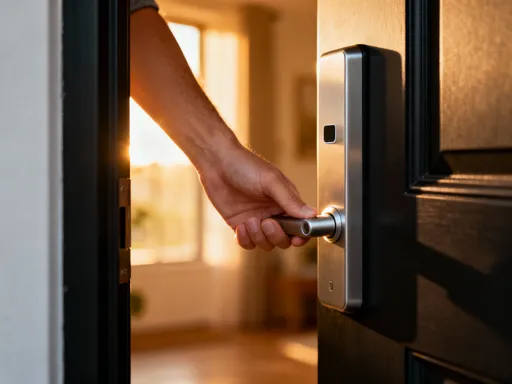
After testing 7 smart locks, this one made me finally feel at home
Remember that moment when you juggle groceries, keys, and a crying toddler at the front door? I did—until I tried smart door locks. What started as a simple upgrade turned into a surprising shift in how I experience home. No more lost keys, no more second-guessing if the door was locked. Just peace of mind, one tap at a time. If you’ve ever felt stressed about home safety, this journey might feel familiar—and eye-opening.
The Key That Almost Broke Me
It was a rainy Tuesday, the kind where the sky seems to have forgotten how to stop crying. I stood at my front door, arms full—two heavy grocery bags digging into my elbows, a diaper bag slung over one shoulder, and my toddler wailing in the stroller behind me. My hands were wet, my keys were slippery, and somehow, for the third time, I missed the keyhole. I jiggled, I twisted, I pushed too hard. Nothing. The lock wouldn’t turn. And then—snap. The key broke off inside. I stood there, soaked and stunned, watching the brass fragment vanish into the darkness of the cylinder. That was the moment I knew: something had to change.
This wasn’t the first time keys had failed me. There was the morning I dropped them down a storm drain rushing to school pickup. The weekend my teenage nephew accidentally locked himself in the house while I was out getting coffee. The countless times I’d lie in bed, eyes wide open at 2 a.m., wondering—did I actually lock the door? Each time, a little more anxiety settled into my bones. I didn’t just want convenience—I wanted control. I wanted to feel safe in my own home without having to earn it through stress and vigilance.
So I started researching smart door locks. Not because I love tech, but because I love peace. I’m not the type to geek out over specs or firmware updates. I care about whether something works when I need it, whether my mom can use it, and whether it makes life easier—not harder. That rainy Tuesday was the last straw. I was done fighting with metal and gravity. I wanted a door that worked with me, not against me.
First Impressions: Confusion, Not Confidence
My first smart lock was supposed to be the solution. Sleek design, glowing reviews, and a price tag that made me hesitate but not regret. I unboxed it with hope. And then came the setup. The instructions were vague, the app kept freezing, and the alignment between the interior and exterior parts felt like trying to thread a needle during an earthquake. It took me three hours—three hours I didn’t have on a Sunday evening—to get it mounted. And when I finally did, my partner tried to open it from the inside and accidentally triggered a lockdown mode. We were stuck. In our own home. With the dog barking and the baby crying.
I remember sitting on the floor, back against the door, thinking, Is this really safer? Or just more complicated? That night, I Googled “how to reset smart lock” at 11 p.m., whispering into my phone so I wouldn’t wake the kids. The voice assistant was no help. The customer support chatbot looped me through the same three options. I finally found a YouTube tutorial that saved us—but I wasn’t feeling like a tech-savvy homeowner. I felt defeated.
This is where so many of us give up. We expect technology to simplify, not sabotage. But early smart home tools often assume you’re tech-literate, patient, or have time to troubleshoot. For someone managing a household, that’s a luxury. I realized then: a smart lock shouldn’t require a manual the size of a novel. It shouldn’t need a degree in engineering. If it’s not intuitive for my sister who still texts with emojis upside down, it’s not ready for real life.
Learning to Trust: Small Wins Build Big Confidence
After returning the first lock, I took a breath and tried again—this time with slower research. I read forums, asked other moms in my community group, and watched real people install these things, not influencers. I found a model that emphasized simplicity: no complex wiring, no hub required, and a reputation for reliability. Installation? Under 25 minutes. The app opened automatically, guided me step by step, and even tested the lock’s alignment with a tone indicator. For the first time, tech felt like it was helping, not hiding.
The real turning point came a week later. My elderly mom was coming over to water the plants while we were away for the weekend. In the past, I’d have to hide a key under the mat—risky, or ask a neighbor—awkward. This time, I created a temporary access code through the app. I texted her the code and said, “Just type it in when you arrive.” Later that day, my phone buzzed: “Front door unlocked. User: Mom (temporary code).” I was on a train, halfway to another city, and yet I felt present. Connected. In control.
Then came the “door locked” notification as I walked away from the house, already on my way to yoga. No second-guessing. No turning back. Just a soft chime on my phone confirming what I needed to know. That’s when it hit me: this wasn’t about being “smart.” It was about being sure. Sure my home was safe. Sure my family could come and go. Sure I didn’t have to carry the weight of every little worry.
The Real Upgrade Wasn’t the Lock—It Was My Peace of Mind
I’ve learned something important in the months since: the most powerful technology doesn’t shout. It whispers. It doesn’t dazzle with flashing lights or voice commands that never quite understand you. It works quietly, consistently, so you can forget it’s even there—until you realize how much it’s doing.
The biggest change wasn’t in my door. It was in my mind. I stopped obsessing over whether I’d locked up. I stopped hiding keys in ridiculous places. I stopped imagining worst-case scenarios every time the door clicked shut. That mental load? It’s gone. And what’s taken its place is something I didn’t expect: space. Space to focus on my kids, my work, my self. Space to breathe.
For parents, this is everything. When you’re managing schedules, meals, school forms, and emotional meltdowns (yours and theirs), the last thing you need is another thing to monitor. But when your home supports you—when it knows you’re coming and greets you without friction—that changes the texture of your day. I’m not exaggerating when I say I sleep better. I walk in the door more calmly. I don’t dread coming home with full arms because I know the lock will work, even if my hands are full of life.
And it’s not just about me. My teenager uses her fingerprint now. My dad, who visits from out of town, gets a one-time code sent by text. The dog walker checks in through the app’s activity log. This little piece of tech has become part of our family rhythm. It’s not replacing human connection—it’s making room for more of it.
How to Choose Without Getting Lost in the Noise
If you’re standing where I once stood—overwhelmed by choices, afraid of another tech disappointment—let me save you some time. I tested seven different smart locks. Some had facial recognition (creepy and unreliable). Others required a hub (extra cost, extra complexity). One died after two weeks because the battery drained overnight. The ones that worked weren’t always the fanciest. They were the ones that got the basics right.
Here’s what I learned to prioritize: ease of setup, battery life, reliable connectivity, and real human customer support. I didn’t care about voice commands if the app crashed. I didn’t want geofencing if it unlocked the door while I was still at the grocery store. I wanted something that worked when I needed it, every time.
Battery life was a game-changer. The best ones last 6–12 months on standard batteries and send gentle alerts when power is low—no surprise blackouts. I also looked for models that still let me use a key as a backup. Because sometimes, even in a smart home, old-school metal matters.
And integration? I didn’t need it to talk to my fridge. But I did want it to work with my phone—no extra apps, no login loops. The winner? A lock that connected directly via Bluetooth and Wi-Fi, sent clear notifications, and let me manage access from anywhere. Oh, and one more thing: I asked my sister and mom to try setting it up. If they could do it, I knew it was truly user-friendly.
Making It Work for *Your* Home: A Simple Setup Guide
You don’t need tools like a professional to install a good smart lock. Honestly, I used a screwdriver and a level app on my phone. That’s it. Here’s how I did it—and how you can too.
First, take off your old lock. Most smart locks fit standard door prep, so unless your door is unusually thick or the strike plate is in a weird spot, you’re probably fine. Measure the backset—the distance from the edge of the door to the center of the knob hole. Standard is 2-3/8” or 2-3/4”. Write it down. This will help you choose the right model.
Next, install the interior assembly. This holds the motor and battery. Slide it into place, secure it with screws, and insert the batteries. Then, attach the exterior part—this has the keypad or fingerprint reader. Line them up carefully. Many models have a tone or light that confirms alignment. Don’t force it. If it doesn’t fit smoothly, double-check your measurements.
Now, download the app. Open it, create an account, and follow the pairing instructions. Most will guide you through connecting to Wi-Fi, naming your lock, and setting up your primary access method—PIN, fingerprint, or phone unlock. Then, test it. Lock and unlock a few times. Make sure the bolt moves smoothly.
Finally, add family members. You can create unique codes for each person—like “KidsAfterSchool” or “DadVisiting.” Set schedules if you want (like “unlock only between 3–6 p.m.” for the babysitter). And teach them how to use it. I showed my daughter with a simple game: “Can you open the door like a spy?” She loved it. My mom just needed a printed note by the door: “Type your code, press #.” Simple. Clear. Stress-free.
When Tech Feels Human: A Door That Knows You’re Home
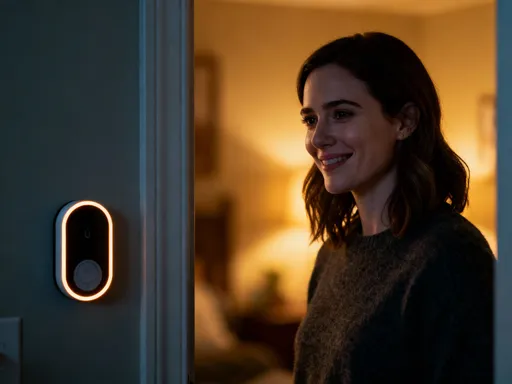
Now, coming home feels different. I pull into the driveway, walk up with my bags, and as I reach for the door, it unlocks. Not because of magic, but because my phone is in my pocket and the lock recognizes me. I don’t fumble. I don’t search. I just walk in. And that small moment—effortless, quiet, dignified—has changed everything.
It’s not just about not dropping groceries. It’s about feeling seen. Like the house is happy I’m back. Like it’s been waiting, not judging. Like it’s part of my team. That might sound sentimental, but after years of feeling like I had to manage every detail, this small act of support means more than I can say.
Technology should serve life, not interrupt it. The best tools don’t demand attention—they disappear into the background and let you live more fully. This smart lock didn’t just upgrade my door. It upgraded my days. It gave me back time, energy, and calm. It helped me feel safe without having to prove it to myself over and over.
If you’ve ever stood outside your home, wet and frustrated, wondering why something so basic feels so hard—this is for you. You don’t need to be a tech expert. You just need a tool that works when you do. And when you find it, you’ll realize: the future of home isn’t about flashy gadgets. It’s about feeling, finally, like you’re really, truly at home.